

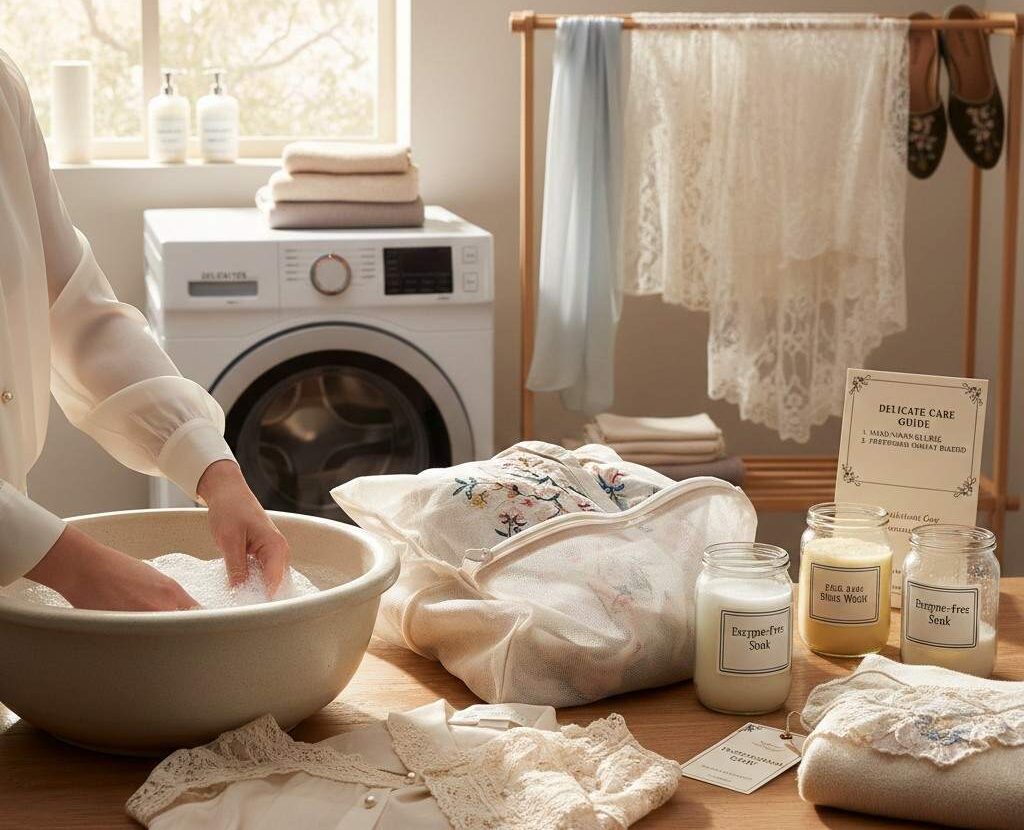
Delicates Guide: How to Wash Delicate Clothes Safely
Knowing how to wash delicate clothes properly can be the difference between garments that last for years and items that lose shape, texture, or detailing after just a few washes. From silk blouses to lace garments and embroidered clothing, delicate fabrics require a more thoughtful approach than everyday laundry.
From our hands-on experience caring for delicate garments, most damage happens not because people are careless—but because instructions feel unclear or overwhelming. This guide breaks down washing delicate clothes step by step, explaining when hand washing is safest, when machine washing is acceptable, and how to dry delicate clothes without causing damage.
Quick Steps: How to Wash Delicate Clothes Safely
- Use cold water to prevent shrinkage and fiber stress
- Select a delicate or hand-wash cycle if using a machine
- Place items in a mesh laundry bag for protection
- Choose a mild detergent for delicates only
- Avoid overloading the washer to reduce friction
- Handle garments gently after washing—do not wring
- Air dry using flat drying or padded hangers
These steps directly address the most common concerns around delicate clothes washing and help reduce the risk of damage.
Understanding Delicate Fabrics
Delicate clothes are garments made from fragile fibers or detailed construction that can be damaged by heat, friction, strong detergents, or high-speed spinning. This includes fabrics that stretch easily, snag, fade, or lose structure under standard wash conditions.
Common delicate fabrics include:
- Silk and silk blends
- Lace garments and lingerie
- Embroidered clothing
- Sheer fabrics and fine knits
Each fabric reacts differently to water, agitation, and drying methods, which is why understanding the material matters before washing.
When Should You Hand Wash Delicate Fabrics?
Hand washing is the safest method when garments are fragile or heavily detailed. It gives you full control over movement, pressure, and soaking time.
You should hand wash delicate clothes when:
- The item is silk or silk-blend fabric
- Lace is thin or loosely woven
- Embroidery threads are raised or decorative
- The care label recommends hand wash only
How to hand wash delicate clothes
Before washing
- Check for loose threads or embellishments
- Separate light and dark colors
During washing
- Use cool water and a mild detergent for delicates
- Gently press the fabric—never scrub or twist
- Limit soaking time
After washing
- Rinse thoroughly to remove detergent residue
- Press water out using a towel
Hand washing is especially effective for preserving silk shine and preventing embroidery damage.
Can Delicates Go in the Washing Machine?
Yes—you can machine wash delicate clothes, but only under the right conditions. Many people ask whether the delicate cycle is safe, and the answer depends on fabric type, machine settings, and preparation.
Machine washing works best for:
- Everyday delicates worn frequently
- Light embroidery with secure stitching
- Structured lace garments
Washing delicates in a washing machine safely
Before washing
- Turn garments inside out
- Place each item in a mesh laundry bag
During washing
- Use the delicate or hand-wash cycle
- Select cold water only
- Set a low spin speed
After washing
- Remove items immediately
- Reshape gently before drying
Top-load machines with agitators require extra caution, especially for lace garments.
Hand Wash vs Machine Wash: What’s Safer?
Washing Method | Risk Level | Best For | Not Ideal For |
Hand wash | Lowest | Silk, heavy embroidery | Large loads |
Machine (delicate cycle) | Low | Everyday delicates | Fragile lace |
Regular cycle | High | None | All delicate clothes |
This comparison helps clarify when each method makes sense.
Do Mesh Laundry Bags Really Protect Delicate Clothes?
Mesh laundry bags are highly effective when used correctly. They reduce pulling, snagging, and excessive movement during machine washing.
Mesh bags are especially useful for:
- Washing lace garments
- Cleaning delicate clothes with straps or hooks
- Washing embroidered clothes in a machine
Use one garment per bag and avoid overcrowding the washer for best results.
How to Wash Silk Fabric Without Ruining It
Silk is strong but sensitive to heat and harsh detergents. Many washable silks can be safely cleaned at home with care.
Best practices for washing silk:
- Always use cold water
- Choose a mild detergent for delicates
- Hand wash preferred unless label allows machine washing
- Avoid soaking for long periods
A common misconception is that all silk must be dry cleaned, but fabric labels provide the best guidance.
How to Wash Embroidered Clothing Safely
Embroidery adds weight and tension, making garments more vulnerable during washing.
Washing embroidered clothes safely
- Turn garments inside out
- Hand wash when embroidery is dense
- Use mesh bags for machine washin
- Avoid high-speed spinning
Thorough rinsing helps prevent stiffness caused by detergent residue.
Choosing the Right Detergent for Delicates
Regular detergents are often too harsh for delicate fabrics.
A good detergent for delicates should:
- Be low-alkaline
- Free from bleach and enzymes
- Rinse clean without residue
Mild or baby detergents can work well, but testing first is always recommended.
How to Dry Delicate Clothes Properly
Drying is where most damage occurs.
How to dry delicate clothes safely
- Air dry only—never tumble dry
- Lay flat on a towel for silk and knits
- Use padded hangers for structured garments
- Keep away from direct heat and sunlight
Heat can permanently shrink or distort delicate fibers.
How Often Should Delicate Clothes Be Washed?
Overwashing shortens garment lifespan.
General guidelines:
- Silk blouses: every 2–3 wears
- Bras and lingerie: every 2–3 wears
- Embroidered garments: when visibly soiled
Spot cleaning between washes helps maintain fabric quality.
Common Mistakes That Damage Delicate Clothes
Avoid these frequent issues:
- Using hot water
- Overloading the washing machine
- Skipping mesh bags
- Twisting clothes to remove water
- Using regular detergent
Most damage happens gradually and is preventable.
When Professional Care Is the Better Option
Home washing isn’t always the safest choice. Professional care may be better when:
- Garments are heavily embroidered or structured
- Fabric value is high
- Stains are set or unknown
- You’re unsure of fabric composition
This is especially relevant for people managing busy households, shared apartments, or professional wardrobes in Qatar’s climate.
Caring for Delicate Clothes with Confidence
Learning how to wash delicate clothes doesn’t require guesswork—just informed decisions. With the right washing method, detergent, and drying approach, delicate garments can be safely maintained at home.
When care feels uncertain or time is limited, exploring professional support can help protect your wardrobe. At Urbanwash, we work daily with delicate garments across Qatar, helping individuals, families, and organizations choose safe, fabric-appropriate care options.
The goal is not just clean clothes—but clothes that last.