

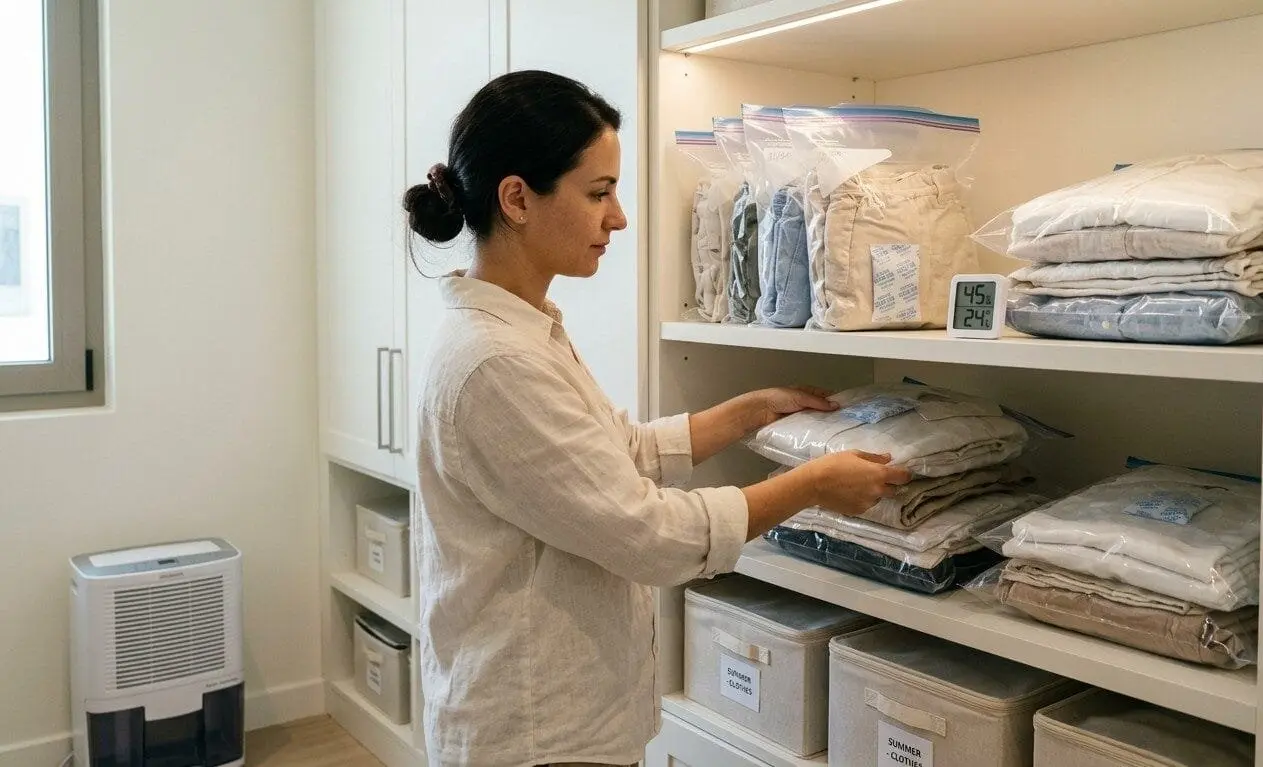
How to Store Summer Clothes in Humid Weather
In Qatar’s hot and coastal climate, learning how to store summer clothes in humid weather is essential to protecting your wardrobe. Humidity can cause mildew odors, fabric yellowing, and even fiber breakdown during storage. We regularly see customers unpack seasonal clothes only to find damage that could have been prevented with proper preparation and moisture control.
Storing summer clothes in humidity requires more than folding and boxing items away. It demands cleaning, complete drying, humidity-proof clothing storage methods, and choosing the right location inside your home.
Why Humidity Is the Biggest Risk to Stored Clothes
High humidity creates ideal conditions for mold growth, especially in poorly ventilated homes and Doha apartments near the coast. When moisture becomes trapped in fabric, mildew develops quickly.
Poor insulation makes it worse. Closets against exterior walls, garages, and unventilated storage spaces allow humidity to linger. Over time, trapped moisture:
- Weakens fibers
- Dulls colors
- Causes permanent musty odors
Definition: Mold forms when moisture, organic residue (like sweat or oils), and warmth combine in enclosed spaces.
In Qatar, seasonal storage must be proactive. If you want to prevent mold on stored clothes, moisture control must begin before packing.
How to Store Summer Clothes in Humid Weather
Step-by-Step Framework
If you’re wondering how to store summer clothes in humid weather properly, the process comes down to five controlled steps: clean, dry, protect, place, and monitor.
STEP-1
Should You Wash Clothes Before Seasonal Storage?
Yes. This is non-negotiable.
Invisible sweat, sunscreen, perfume, and body oils attract both mold and pests. Small stains oxidize in storage and become permanent.
Before storing:
- Wash or dry clean every item
- Treat stains thoroughly
- Press garments to prevent deep creasing
For delicate dresses, silk, rayon blends, and structured garments, professional cleaning ensures no hidden residue remains. We often prepare seasonal wardrobes at Urbanwash specifically for long-term humid storage.
This is the foundation of the best way to store clothes in humidity.
STEP-2
Dry Completely Before Packing
Even slightly damp fabric can trigger mildew in sealed containers.
In humid climates, air-drying alone may leave moisture trapped in seams and waistbands. Allow extra indoor drying time in a ventilated area. Never pack clothes straight from a drying rack in high humidity.
When people ask how to prevent mildew on clothes in storage, this is usually where mistakes happen.
STEP-3
Moisture Control for Clothes Storage
Moisture control is the core of humidity-proof clothing storage.
Silica gel and activated charcoal serve different purposes:
- Silica gel absorbs moisture inside sealed bins
- Activated charcoal helps manage odor and light humidity
Use desiccants inside airtight containers and replace them mid-season if storing longer than three months.
Avoid overpacking bins. Compressed fabrics restrict airflow and trap residual moisture.
STEP-4
Protect from Mold and Pests Together
Mold and pest damage often occur simultaneously in humid environments.
Unwashed garments attract insects. Humid conditions attract mildew. Cedar blocks help deter moths without trapping moisture like chemical repellents sometimes can.
The key is balance: dry fabric, controlled airflow, and mild pest deterrents.
STEP-5
Elevate and Monitor Storage
Where you place storage matters as much as how you pack it.
- Keep bins off floors
- Avoid exterior walls
- Schedule a mid-season inspection
Short-term storage (3–4 months) still requires monitoring. Long-term off-season clothing storage solutions require planning and reminders.
What Is the Best Storage Location in Humid Areas?
Choosing the right location determines success.
Ranked from best to worst:
- 1. Interior climate-controlled closet
- 2. Elevated wardrobe inside living space
- 3. Shared closet with airflow gaps
- 4. Garage (high humidity and pest risk)
- 5. Attic in humid regions (avoid)
Many residents in Qatar don’t have basements or attics. If you’re asking, where to store clothes if you don’t have a basement or attic, focus on interior closets away from exterior heat and moisture exposure.
How to Store Clothes in a Small Apartment
Storing clothes in a humid climate apartment can feel overwhelming.
Limited closet space, no spare rooms, and shared wardrobes are common challenges. Start by clearly separating seasons. Mixing everything together increases clutter and confusion.
Practical solutions:
- Use uniform stackable bins
- Create vertical shelving above hanging rails
- Label clearly to avoid forgetting contents
Avoid under-bed storage if airflow is poor. In humid homes, airflow is more important than hidden storage.
These small adjustments make seasonal clothing storage tips easier to maintain consistently.
Choosing the Right Storage Containers
Container choice directly affects moisture levels.
Airtight Plastic Bins
Airtight bins work well when garments are fully dry and paired with desiccants. Without moisture absorbers, they can trap humidity inside.
Vacuum-Sealed Bags
Vacuum bags save space but must be used carefully. They are only safe for fully dry garments and not ideal for structured or delicate fabrics. Long-term compression can distort fibers.
Breathable Garment Bags
For dresses and delicate summer pieces, breathable garment bags often work better. Hang structured garments; fold stable fabrics with tissue to reduce creasing.
Selecting the right container is part of mastering how to store summer clothes in humid weather effectively.
Fabric-Specific Storage Tips for Humid Climates
Different fibers react differently to humidity.
- Cotton and linen: breathable but mildew-prone
- Silk: requires dry-clean preparation
- Rayon blends: highly sensitive to damp storage
- Structured garments: benefit from pressing before storage
Fabric-specific care significantly reduces the risk of long-term damage.
Quick Checklist:
Humidity-Proof Summer Clothes Storage
Before packing away seasonal items, confirm:
- All garments are washed or dry cleaned
- Clothes are fully dry
- Stains are treated
- Desiccants are added
- Cedar blocks are placed for pest prevention
- Bins are elevated off floors
- Storage is away from exterior walls
- Mid-season inspection is scheduled
This checklist summarizes the best way to store clothes in humidity while preventing mold and odor.
Common Mistakes Storing Summer Clothes in Humidity
We frequently see avoidable damage caused by:
- Storing unwashed garments
- Packing slightly damp items
- Using cardboard boxes
- Blocking airflow
- Ignoring seasonal inspection
Understanding how to store summer clothes in humid weather properly eliminates most of these risks.
When Professional Laundry Makes Storage Easier
Professional cleaning adds an extra safeguard before seasonal storage.
Fabric-safe washing removes hidden oils. Pressing prevents deep wrinkles. Odor-neutralizing processes reduce the chance of musty smells forming during storage.
At Urbanwash in Qatar, we prepare garments daily for humid conditions. Proper pre-storage treatment significantly lowers mold risk, especially in coastal areas and densely insulated buildings.
Protecting Your Wardrobe in Qatar’s Humid Climate
Learning how to store summer clothes in humid weather is ultimately about preparation and moisture control.
Clean thoroughly. Dry completely. Use desiccants. Choose interior storage. Inspect periodically.
In humid regions like Qatar, small preventive steps protect your wardrobe from mold, pests, and fabric deterioration.
If you’re preparing for seasonal rotation and want guidance on fabric-safe cleaning, pressing, or garment care suited to humid climates, Urbanwash in Qatar offers practical solutions designed to simplify the process.
FAQs
Clean and fully dry garments first. Use airtight bins with desiccants, elevate storage off floors, and avoid exterior walls. Inspect mid-season for moisture buildup.
The best way combines professional cleaning, complete drying, moisture absorbers, pest deterrents, and interior climate-controlled storage.
Remove all body oils before storage, ensure clothes are completely dry, add silica gel, and avoid damp or poorly ventilated areas.
Use interior wardrobes away from exterior walls. Install vertical shelving if space is limited and avoid humid garages or attic spaces.
Yes. Even invisible residue can cause mold growth or pest attraction during storage. Cleaning is the first step in proper humidity-proof clothing storage.