

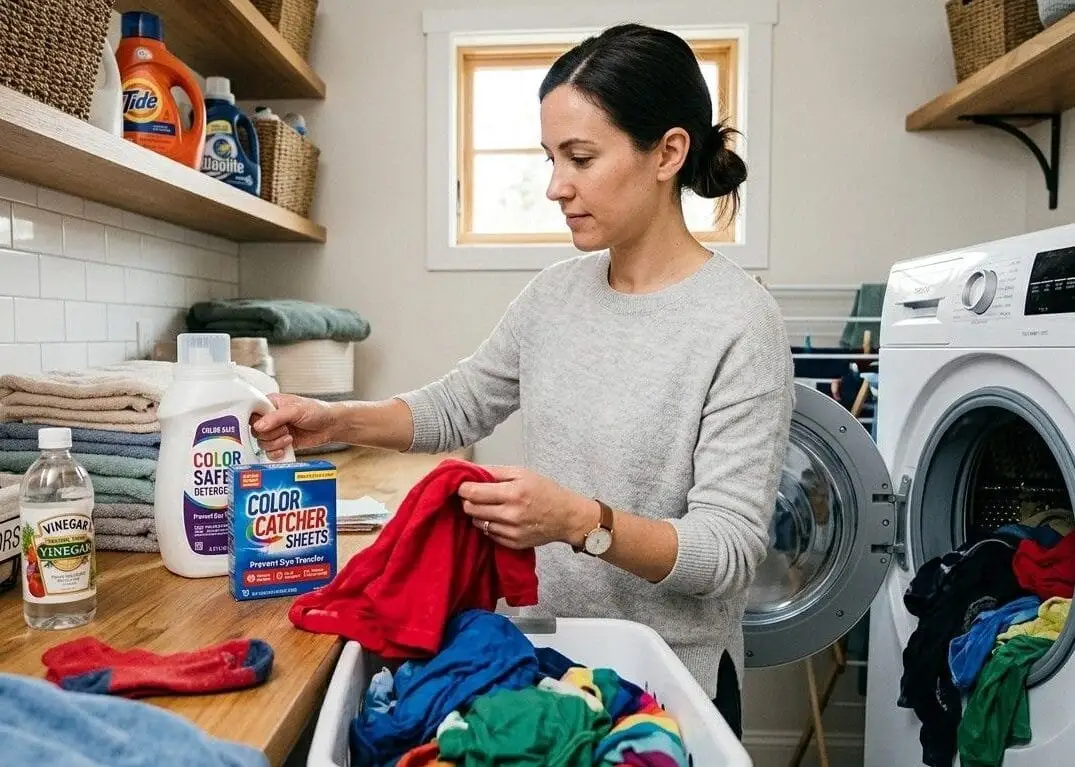
How to Stop Color Bleeding in Clothes During Washing
We’ve all been there—pulling out a load of laundry only to find white clothes turned pink or colors looking dull and faded. Color bleeding in clothes is one of the most frustrating laundry problems, especially when it affects multiple garments at once.
Simply put, color bleeding happens when dye from one fabric releases into water and transfers onto another. In hot climates like Qatar, this issue becomes more common due to heat, sweat, and humidity.
In this guide, we’ll show you how to stop color bleeding in clothes, how to prevent it, and what to do if it has already happened—based on practical, real-world experience.
Quick Answer: How to Stop Color Bleeding in Clothes
- Wash clothes in cold water
- Separate whites, lights, and darks
- Turn garments inside out
- Use color catcher sheets
- Avoid overloading the machine
- Rewash immediately if you notice dye transfer in clothes
What Is Color Bleeding in Clothes?
Color bleeding occurs when fabric dye is not fully bonded to fibers and leaks into water during washing. This loose dye can then attach to other garments.
Several factors influence this:
- Water temperature
- Fabric type
- Washing friction
- Detergent strength
Dye Bleeding vs. Dye Transfer
This is a common point of confusion.
Dye bleeding
Happens in water (e.g., a red shirt turning whites pink)
Dye transfer (crocking)
Happens through friction (e.g., denim rubbing onto lighter fabrics)
Understanding the difference helps you apply the right solution.
Why Do New Clothes Bleed More
From practical experience, new clothes often contain excess dye that hasn’t fully set. This is especially common with dark colors, denim, and fast-fashion fabrics.
That’s why the first few washes are critical to prevent color bleeding in laundry.
Why Is Color Bleeding Worse in Qatar Climates
We’ve seen this happen often—clothes bleed more in hotter environments.
- Heat opens fabric fibers, making dye release easier
- Sweat weakens dye bonds over time
- Humidity slows drying, allowing dye to linger
These conditions increase the risk of color bleeding if proper washing methods aren’t followed.
What Causes Color Bleeding in Laundry?
Most cases come down to a few avoidable mistakes. Washing new clothes without pre-treatment often releases excess dye, while mixing light and dark fabrics increases the risk of transfer. Using hot water too early can also loosen dye from fabrics.
Overloading the washing machine creates more friction, and harsh detergents can weaken dye bonds—especially in lower-quality fabrics.
We’ve seen this repeatedly: ignoring care labels, skipping proper sorting, or drying clothes without checking for stains can quickly lead to dye transfer. Avoiding these basics is key to effective color bleed prevention.
How to Avoid Color Bleeding When Washing Clothes
1. Sort Clothes Properly
Separate laundry into whites, lights, and darks.
If you’re using shared machines, at least keep whites separate.
2. Use Cold Water
Cold water helps keep dye locked into fibers, while hot water can cause dye to release—especially in new clothes.
3. Wash New Clothes Separately
For the first 3–5 washes, isolate:
- Reds
- Blacks
- Denim
This is one of the most effective ways to stop color bleeding from clothes.
4. Turn Clothes Inside Out
This reduces friction and protects outer fabric surfaces.
5. Avoid Overloading
Overloading increases friction and leads to uneven washing, which can cause dye transfer.
What Tools Help Prevent Color Bleeding in Laundry?
Color Catcher Sheets
These absorb loose dye in the water before it can settle on other clothes. They are especially useful for mixed loads.
Anti-Redeposition Detergents
These prevent dye from reattaching to fabrics and help with washing dark clothes without bleeding.
Mesh Laundry Bags
These reduce direct contact between garments, minimizing friction and dye transfer.
STEP-1
Do NOT Dry the Clothes
Drying can make stains harder to remove.
STEP-2
Rewash in Cold Water
This helps remove loose dye before it sets.
STEP-3
Use a Color Run Remover
These are designed specifically for color bleeding fix after wash situations.
STEP-4
Repeat if Needed
Some stains require multiple treatments, but avoid overwashing delicate fabrics.
How to Remove Color Bleed from Clothes After Washing
If dye transfer has already happened:
- Soak affected items in cold water with a color-safe cleaner
- Focus on white or light fabrics first
- Keep them separate until clean
Results may take more than one attempt, so consistency is important.
How to Fix Color Bleed on Clothes
Drying does not always permanently set stains.
You can still:
- Rewash with a color remover
- Use oxygen-based cleaners
- Repeat treatment if needed
Acting quickly improves your chances of success.
How to Handle Clothes That Keep Bleeding
Repeated cold washes can help remove excess dye over time. However, some fabrics continue bleeding due to poor dye quality.
Vinegar and salt may offer limited support but are not reliable solutions. If bleeding continues, it’s best to:
- Wash the garment separately
- Avoid mixing it with lighter fabrics
How to Handle Clothes That Keep Bleeding
Multi-colored garments can bleed into themselves.
To reduce this risk:
- Use cold water
- Select gentle cycles
- Avoid long soaking
Testing before washing is always recommended.
Laundry Myths vs Facts
- Vinegar sets dye: Partially true, but not enough on its own
- Salt prevents bleeding: Limited effect on modern fabrics
- Hot water stops bleeding: Incorrect—it often makes it worse
Understanding these helps you avoid ineffective methods.
How to Stop Color Bleeding in Clothes
- Use cold water
- Separate whites and darks
- Wash new clothes separately
- Use color catcher sheets
- Avoid overloading
When Should You Seek Professional Laundry Help?
Professional care is recommended for:
- Delicate or expensive garments
- Severe dye transfer cases
- Fabrics that continue bleeding
Conclusion
Color bleeding can be frustrating, but with the right approach, it’s both preventable and manageable. The key is understanding how fabrics behave and taking the right steps early.
If you’re dealing with stubborn color bleeding or want expert garment care tailored to Qatar’s climate, Urbanwash offers reliable solutions designed to protect your clothes and simplify your routine.
FAQs: Color Bleeding in Clothes
Use cold water, separate colors properly, and wash new clothes separately for the first few cycles.
Rewash immediately in cold water with a color run remover before drying.
Yes, in many cases. Rewashing with proper treatments can still remove the stain.
It may help slightly, but it’s not a reliable standalone solution.
This usually indicates poor dye quality. Such garments should be washed separately.